Whakapapa o Ngāti Ohomairangi (Te Arawa)
Puhaorangi
Ohomairangi
Ruamuturangi
Taungatapu
Atuamatua
*Tia
Tapuika
*twins
*Hei
Waitaha
Rākauri
Ngatoroirangi
Houmaitawhiti
Tamatekapua
Oro
Maaka
Tapuika grew to adulthood on Raiatea eventually marrying and beginning a family with the birth of his son Makahae. An increase in the population led to scarcity of land and food resources resulting in ongoing wars between Ngāti Ohomairangi and other villages. This eventuated in members of Ngāti Oho deciding to leave Raiatea to seek out the lands discovered by Kupe for settlement. Tapuika and approximately 30 other Ngāti Oho departed in the waka Te Arawa from Faaroa Harbour Hawaiiki for Aotearoa.
After several near calamities the waka Te Arawa eventually made landfall at Whangaparaoa in Aotearoa. As the waka travelled along the coast the tupuna began to taumau or lay claim to the new lands by naming the land after parts of their body rendering the land sacred. When the Te Arawa waka was midway between Motiti Island in the Bay of Plenty and Wairakei stream Papamoa, Tia stood to taumau the lands for his son Tapuika.
"Mai i ngā pae maunga ki te toropuke e tu kau mai ra ki te awa e rere mai ana waiho te whenua ko te takapu a taku tamaiti a Tapuika."
"From the hills standing before me, to that flowing river I claim these lands as the belly of my child Tapuika."
Despite the battles of the 18th – 19th century and the machinations of the Native Land Court in the late 1800’s through to the 20th century the descendants of Tapuika have remained on the lands claimed for their tupuna from the arrival of the waka in Aotearoa to today.
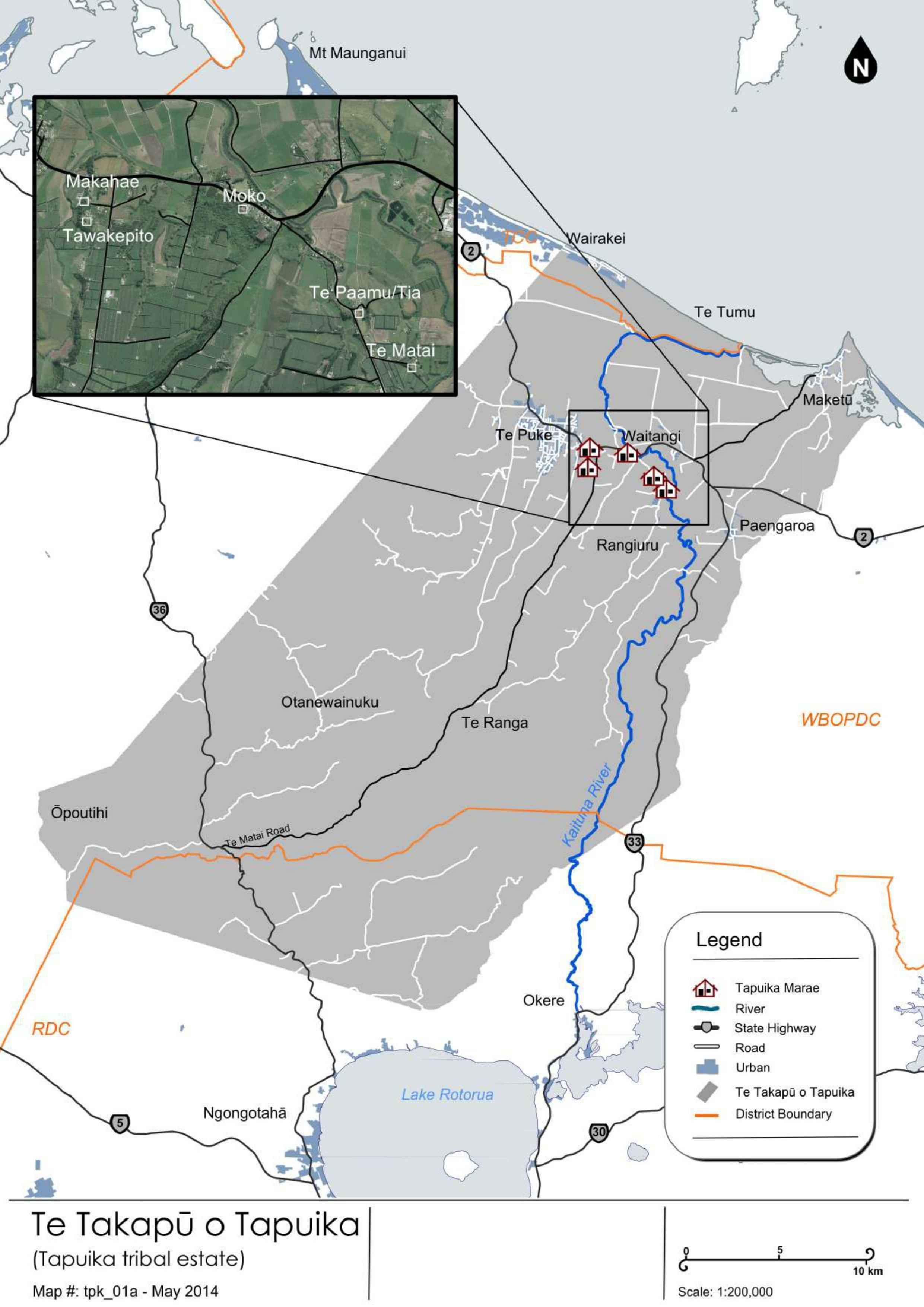
Te Takapu o Tapuika (tribal rohe) today commences at Wairakei stream over the Papamoa hills to Puwhenua in the west, inland to Kaharoa to the Pueto stream to Te Hiapo heading in an easterly direction to Little Waihi, Maketu and returning along the coast back to Wairakei Papamoa.

Office:
Suite 1, Level 1, 46 Jellicoe St, Te Puke
PO Box 15, Te Puke 3153
Contact:
07 573 5351
info@tapuika.iwi.nz